

All You Need to Know About Quartz Countertops
Aug 16, 2021
Beautiful, durable, easy-care quartz is among the most popular countertop materials available—but it is pricey. This complete countertop primer will set you up all of the necessary information on selecting and caring for quartz countertops, so you can make a smart decision and enjoy your work surface for years to come.
What Is a Quartz Countertop?
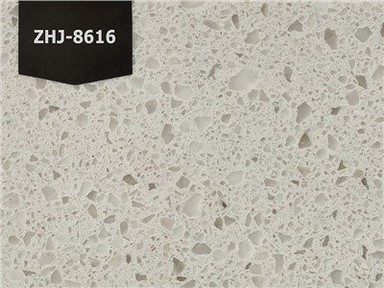
A visit to a kitchen showroom nowadays will show you a dazzling array of quartz countertop designs and patterns that remarkably mimic real marble and other natural stone. But quartz has come a long way! First appearing in Italy in the 1960s, these countertops were developed—by combining ground quartz particles with resins into a slab—as an alternative to stone that wouldn’t easily crack or break. Cutting-edge improvements in solid-surface technology have elevated quartz from functional to fabulous. With an abundance of finish choices and endless combinations of color and edge styles, you’ll likely find something stunning that suits your home.
Not only will you appreciate the look of quartz, you’ll find it remarkably easy to maintain—unlike marble and natural stone, which require a special sealant and can be finicky to care for. Quartz contains 90 to 94 percent ground quartz and 6 to 10 percent polymer resins and pigments, combined to produce a granite-hard slab that can duplicate the look of mesmerizing marble swirls or earthy natural stone, without the maintenance. Quartz also resists scratching and cracking to a greater degree than many natural countertops, ranking a “7” in hardness on the Moh’s scale Marble, in comparison, ranks only a “3.”
A note to homeowners in the market to remodel: When exploring countertop options, make sure not to confuse quartz with quartzite. Quartz is engineered with pigments and resins, while quartzite is actually sandstone that, through natural metamorphosis, was exposed to intense heat, which caused it to solidify. Mined from large stone quarries and cut into solid slabs, quartzite is also available for countertops—but, unlike quartz, it must be sealed before use and again once or twice a year thereafter.
What Are the Pros and Cons of Quartz?
Thanks to its non-porous nature, quartz is mold-, stain-, and mildew-resistant, making it a breeze to keep not merely clean but also germ- and bacteria-free. Quartz also resists heat damage—up to a point. But “thermal shock” can result from placing a hot pan straight from the oven or stovetop onto a cold quartz countertop, which can lead to cracking or discoloring. And while quartz does resist staining because liquids can’t penetrate its surface, it’s not 100 percent stain-proof. Messes should be cleaned up quickly to best preserve quartz countertops’ original color.
If you’re planning a backyard kitchen, steer clear of quartz altogether. It’s not suitable for outdoor installation, as the sun’s UV rays can break down the resin binders and degrade the countertop, leading to fading and eventual warping.